
Therapeutic Massage
Therapeutic massage is a goal‑oriented approach to soft‑tissue treatment. Instead of following a routine, our therapists design the session around your health concerns. This flexibility is what makes therapeutic massage ideal for addressing both acute injuries and long‑standing issues while still delivering a deeply calming experience.
Registered Therapeutic Massage Starts From $110

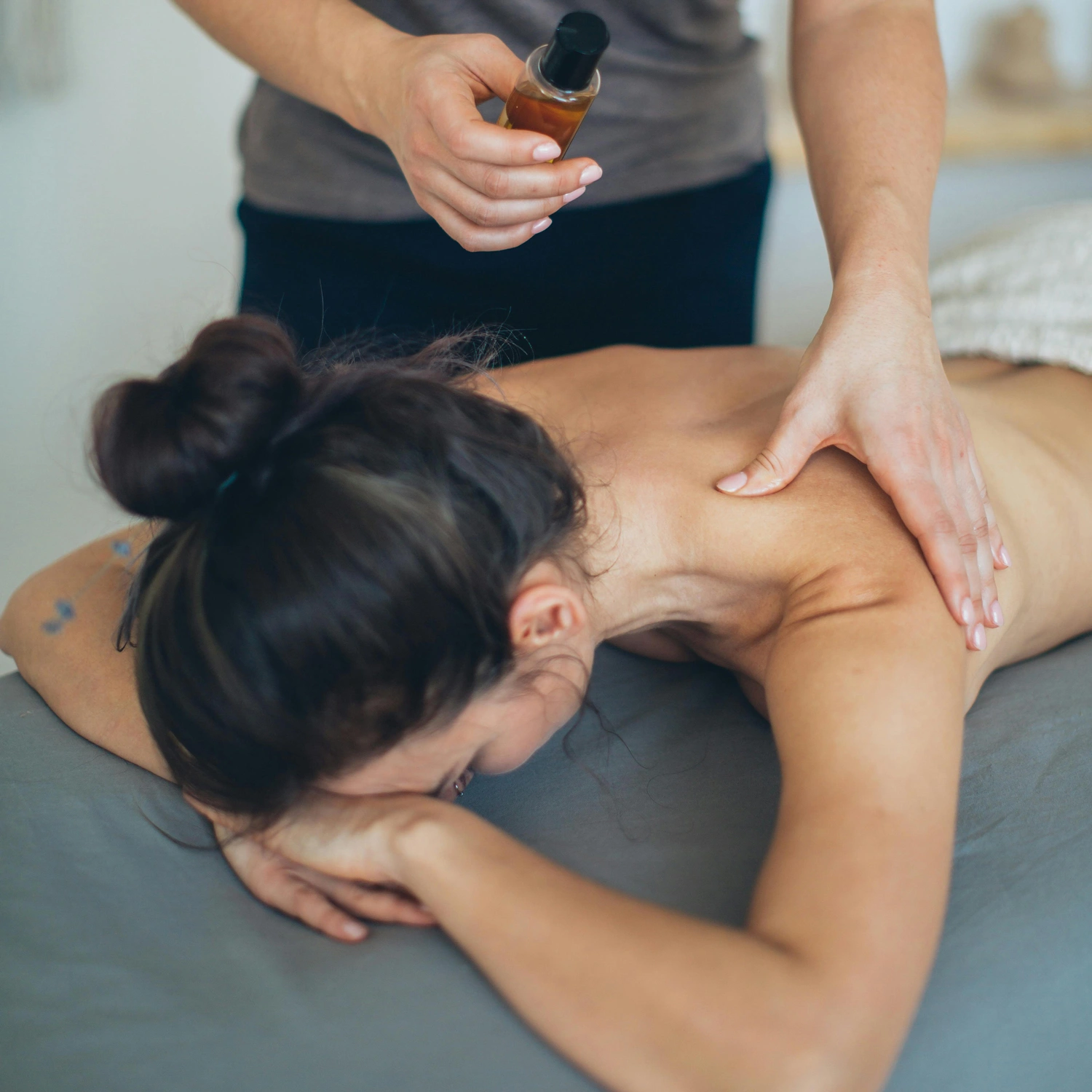
What are the Benefits of Therapeutic Massage?
Pain Relief & Injury Recovery
Stress Reduction & Mental Well‑being
Increased Mobility & Flexibility
Posture & Functional Improvements
What Are The Therapeutic Massage Techniques?
Muscle Energy Technique
Massage therapist positions the joint at a comfortable barrier and cues a light, pain-free isometric contraction for 5–8 seconds. After the brief effort, clinician advances to the new barrier to lengthen targeted tissues such as iliopsoas, hamstrings, or levator scapulae. This contract-relax sequence improves end-range tolerance and dampens protective spasm around cervical or lumbar segments.
PNF Stretching (Hold-Relax / Contract-Relax)
Protocol pairs a short resisted contraction with a slow, graded stretch to recalibrate stretch reflex sensitivity. Application frequently targets hip rotators, hamstrings, and shoulder IR/ER to expand usable range for gait and reach. Repeated cycles yield larger flexibility gains than static holds while preserving control at the new range.
Strain–Counterstrain (Positional Release Therapy)
The registered massage therapist identifies a tender point and places the body into a position of maximal ease that shortens the involved tissues. A quiet hold—typically about 90 seconds—reduces nociceptive drive and lowers gamma bias in the area. A slow return to neutral consolidates the change and lessens palpation pain in regions like paraspinals or sternocleidomastoid.
Instrument-Assisted Soft-Tissue Mobilization
Beveled tools deliver precise shear along fascial borders and tendon interfaces such as plantar fascia, common extensor, or patellar regions. Controlled passes stimulate local perfusion and collagen remodeling when paired with progressive loading. Sessions commonly produce measurable ROM improvements without exceeding client comfort.
Myofascial Decompression
Negative-pressure cups lift superficial fascia to bias fluid movement and reduce surface adhesions. Static placement or gentle glides along upper trapezius and thoracolumbar lines ease density while raising pressure-pain thresholds. Coupling cups with active movement helps retain mobility gains and normalizes tissue glide.
What is the Cost of Therapeutic Massage?
30-minute
RMT session- Designed for addressing two primary areas of concern or for patients returning after more than a year since their last therapy session.
45-minute
RMT session- Ideal for patients focusing on a single primary area of concern, this treatment is also highly recommended for pediatric patients, ensuring targeted care tailored to their specific needs.
60-minute
RMT session- Recommended for initial visits, this treatment typically allows for focused care on one primary area of concern, with the opportunity to address a secondary area as well.
90-minute
RMT session- Designed for addressing two primary areas of concern or for patients returning after more than a year since their last therapy session.
How to Book a Therapeutic Massage Therapy?
Week 01
Choose Your Therapeutic Massage Therapist
Week 02
Select the type of Therapeutic Massage
Week 03
Pick a Date and Time
Week 03
Provide Personal Information
Week 03
Prepare for the Appointment
Book Your Therapeutic Massage Now
Everyone deserves to feel comfortable with their body.
Registered Massage Therapists in Richmond

Jameson Li
Registered Massage Therapist

Kathleen Abbott
Registered Massage Therapist

Sabrina Lee
Registered Massage Therapist

Dabin Li
Registered Massage Therapist

Amy Grifal
Registered Massage Therapist

Kristina Taylor
Registered Massage Therapist
Questions From Our Therapeutic Massage Clients
What is the difference between therapeutic and relaxation massage?
Therapeutic massage is aimed at treating specific issues such as pain, injury recovery or postural problems. Relaxation or Swedish massage focuses mainly on stress relief using lighter pressure and broad, soothing strokes. Many sessions combine elements of both, but therapeutic treatments are more targeted and clinical in nature.
Who is therapeutic massage best suited for?
What techniques will my therapist use?
Your therapist will customize techniques based on your needs. They might start with gentle effleurage to warm the tissue, then progress to deeper myofascial release, trigger‑point work or stretching. Communication during the session ensures the methods and pressure remain comfortable and effective.
Will therapeutic massage hurt?
You may feel “good” discomfort when the therapist works on a tight area, but you shouldn’t experience sharp or lingering pain. Always tell your therapist if the pressure feels too much; we can adjust the approach to suit your comfort level.
Are there any side effects or contraindications?
Mild soreness or fatigue is common for a day or two as your body processes the work. Some people feel a bit light‑headed immediately after a session, which usually resolves quickly with water and rest. Massage is generally safe, but people with blood‑thinning medications, certain skin conditions, recent surgeries or implanted medical devices should consult a doctor first. Avoid massage if you have infections, open wounds or a fever.
How often should I schedule sessions?
The ideal frequency depends on your goals. For acute issues or intensive rehabilitation, weekly or biweekly visits may be beneficial. For general maintenance or stress management, a monthly session often helps you stay balanced. Your therapist can suggest a schedule based on your progress and lifestyle.
Is it covered by insurance?
Many extended health benefit plans in British Columbia cover registered massage therapy. We provide receipts and can direct bill to a range of insurers. Check with your provider for details on coverage amounts and referral requirements.
What to expect during my visit?
Every client has different goals, so each session begins with a short consultation. Your therapist will ask about your medical history, current concerns and desired outcomes. Communication is key; please let us know about any recent surgeries, medications or health conditions. Once your therapist understands your needs, you’ll lie comfortably on a massage table, fully draped except for the area being treated. Soft music, calm lighting and a supportive bolstering system help you relax.Throughout the session, your therapist will check in about pressure and comfort. Therapeutic massage can feel intense in tight areas, but it shouldn’t be painful. If anything feels too deep, simply let us know; we can always adjust. Afterwards you may feel very relaxed or slightly sore. Drinking water, gentle movement and rest can help your body integrate the work. Some clients even experience a “massage drunk” sensation; sitting quietly and hydrating will help this pass quickly.